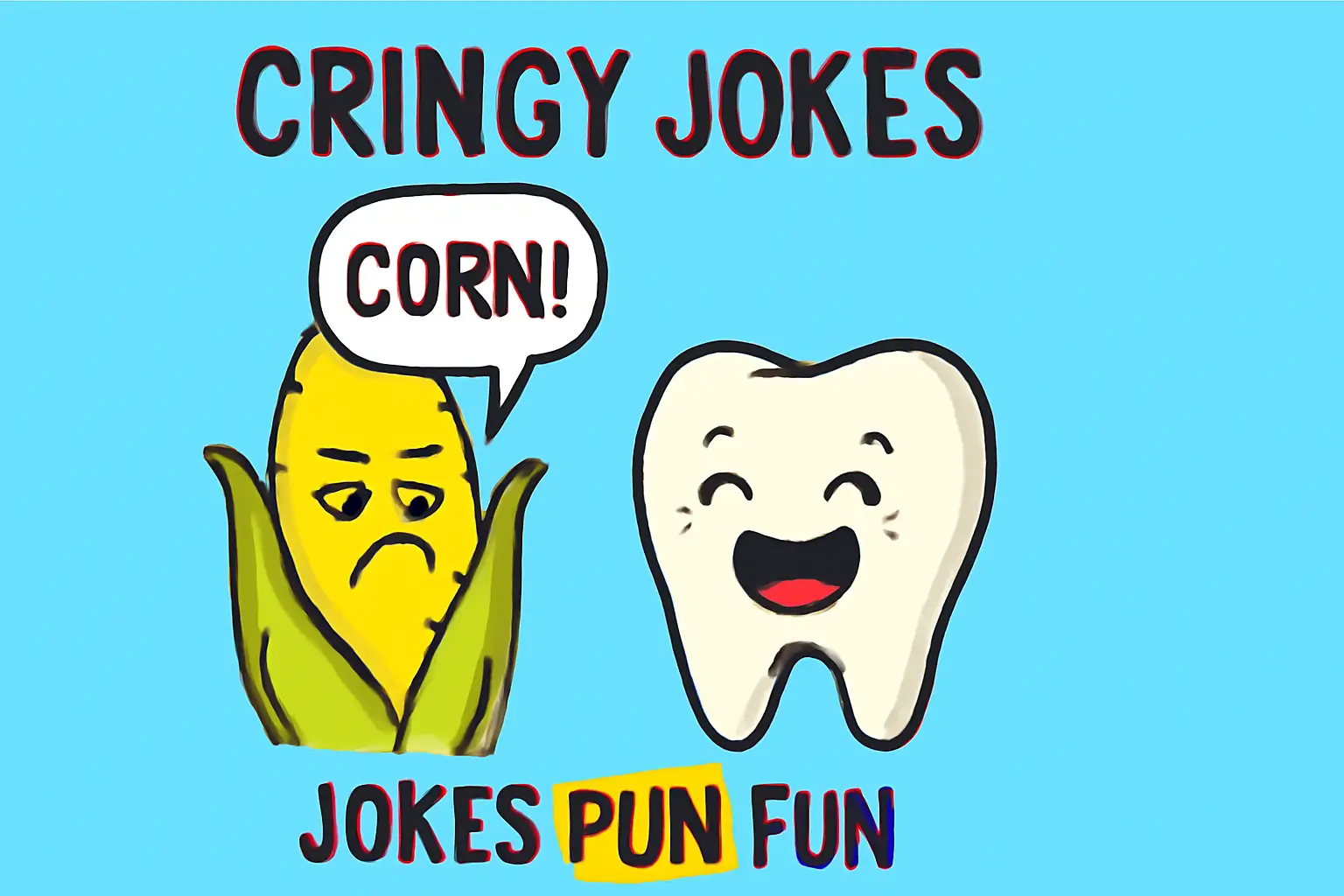
Cringy Jokes Explained: What Makes Them Awkwardly Popular?
There's a unique type of humor that doesn't aim for roaring laughter but rather a collective groan, an eye-roll, or that distinct shiver of discomfort known as "cringe." Yet, despite – or perhaps because of – their ability to make us wince,
cringy jokes have carved out a surprisingly popular niche in our comedic landscape. From playground chants to sophisticated online forums, these awkwardly endearing quips persist, begging the question: what makes them so enduringly, well, cringy, and why do we secretly love them?
At first glance, a cringy joke seems to defy the very purpose of humor. It often lacks a clever punchline, relies on predictable wordplay, or devolves into outright nonsense. Yet, this very subversion of comedic norms is precisely where their power lies. They're a playful rebellion against expectation, a reminder that humor doesn't always have to be intelligent or sophisticated to elicit a reaction.
The Anatomy of a Cringe: Deconstructing the Awkward Laugh
What exactly constitutes a
cringy joke? It's a delicate balance, often tipping into absurdity, simplicity, or a profound lack of an actual punchline. Let's break down some classic examples to understand their awkward charm.
Consider the infamous "You know what?" followed by "Chicken butt!" This seemingly childish exchange is a masterclass in low-stakes cringe. It's not funny in the traditional sense; its humor comes from its sheer silliness and the way it deliberately sets up an expectation only to deliver something entirely nonsensical. The follow-up questions only amplify the effect, spiraling into a wonderfully ridiculous sequence: "You know why? Chicken thigh! You know where? Chicken fair! You know who? Chicken poo! You know how? Chicken cow! You know when? Chicken hen!" This relentless, escalating absurdity and predictable repetition is exactly what gives it its groan-worthy power. It's a classic example of why
Why 'Chicken Butt' Jokes Endure as Peak Online Cringe.
Other examples lean into pure non-sequitur or a deliberate breaking of conversational flow:
- "It’s living I’m here." – This phrase, seemingly disjointed and out of context, offers no setup or payoff, leaving the listener utterly bewildered. The humor, if any, is derived from the unexpected break in logic.
- "Quiet zombie rev." – Again, a string of words that form a phrase but utterly lack any coherent meaning in a joke context. It's surreal and baffling, often eliciting a chuckle of confusion rather than amusement.
- "You are smart / I am dumb." – This simple reversal of attributes, when followed by a completely unrelated and childish punchline like "Chicken butt," pulls the rug out from under any expectation of a clever retort. The abrupt shift in tone and subject is a key ingredient in its cringiness.
These examples highlight several core characteristics:
- Nonsense and Absurdity: They often defy logic, creating a humorous disconnect.
- Predictability and Repetition: The "chicken butt" series thrives on its repetitive structure, making the listener brace for the next absurd answer.
- Lack of a Traditional Punchline: The "joke" itself is often the awkwardness or the anti-climax.
- Childish Simplicity: Many cringy jokes hark back to playground humor, tapping into a nostalgic, simpler form of comedy.
- Anti-Humor: Some cringy jokes are intentionally unfunny, with the humor stemming from the deliberate failure to be funny.
Beyond the Groan: The Unexpected Appeal of Cringy Humor
If
cringy jokes make us uncomfortable, why do they remain so popular? The answer lies in a fascinating interplay of psychology, nostalgia, and social dynamics.
One widely accepted theory for why we find things like awkward humor enjoyable is the
Benign Violation Theory. This theory suggests that humor arises when something is perceived as a violation (e.g., of social norms, logic, or expectations) but is simultaneously benign or non-threatening. A cringy joke violates the unspoken rules of good humor—it's often predictable, silly, or nonsensical—but it does so in a safe, harmless way. We cringe because of the violation, but we laugh (or groan with affection) because we know there's no real harm.
Beyond academic theories, cringy jokes serve several practical purposes:
- Social Bonding Through Shared Discomfort: A collective groan or a shared eye-roll over a truly awful joke can be a surprisingly effective way to build camaraderie. It's a shared experience of mild embarrassment or exasperation that unites people. Think of the universal reaction to a classic "dad joke" – the predictable pun that elicits both a groan and a smile.
- Nostalgia and Simplicity: Many cringy jokes are relics of childhood. Hearing a "chicken butt" joke might transport adults back to their schoolyard days, evoking a sense of innocent, uncomplicated humor. In a complex world, there's a certain comfort in the sheer simplicity and silliness of these quips.
- Subversion of Expectations: In an age where comedy often strives for sharp wit and intricate setups, cringy jokes offer a refreshing, albeit awkward, alternative. They defy the pressure to be clever, finding humor in their deliberate lack of sophistication. This anti-humor approach can be surprisingly liberating.
- The "So Bad It's Good" Phenomenon: There's a particular kind of ironic appreciation for things that are spectacularly bad. A joke that fails so spectacularly to be funny that it circles back around to being amusing falls into this category. It’s not just bad; it’s *artfully* bad, often delivered with a straight face and an earnestness that amplifies the cringe.
- Internet Culture and Ironic Appreciation: The digital age has embraced cringe with open arms. Online communities, meme culture, and platforms like Reddit and TikTok thrive on content that is awkward, embarrassing, or deliberately "cringy." There's a self-aware, ironic enjoyment of these jokes in a virtual space, where the distance allows for appreciation without actual social discomfort. This is perfectly exemplified by forums that actively engage in The Quest for Peak Cringe: Dissecting Online Forums' Worst Jokes.
From Playground to Online Forums: Where Cringy Jokes Thrive
The habitat of the
cringy joke is remarkably diverse, spanning generations and platforms.
In schoolyards, they are tools of innocent rebellion and simple amusement. Children relish the predictability and the slight naughtiness of saying "butt" or "poo," even if it’s wrapped in a joke. The goal isn't complex humor but a guaranteed reaction, be it a giggle or a mock scolding from a teacher.
As we age, these jokes evolve. The "dad joke," a subset of cringy humor, becomes a staple in family gatherings. Often pun-based and delivered with unwavering enthusiasm, they are designed to elicit groans from teenagers and knowing smiles from fellow adults. The humor here is less about the joke itself and more about the shared experience of the joke-teller's earnestness and the audience's predictable reaction.
The rise of the internet, however, has given
cringy jokes a whole new dimension. Online forums, chat groups, and social media platforms are fertile ground for both the spontaneous generation and the deliberate curation of awkward humor. As seen in various online discussions, users actively challenge each other to "make the most cringy jokes possible." This isn't accidental; it's a conscious effort to push comedic boundaries, exploring the very limits of what constitutes humor. The shared objective of creating "peak cringe" fosters a unique community where the goal is to induce the strongest possible groan. Here, the context isn't just a casual exchange but a performance, an ironic spectacle.
Mastering the Art of the Deliberately Cringy Joke
For those who wish to embrace the power of the awkward, delivering a
cringy joke effectively requires a certain finesse:
- Commitment is Key: Hesitation kills the cringe. Deliver the joke with absolute conviction and a straight face, even if you know it's terrible. The earnestness enhances the awkwardness.
- Read the Room: Cringy jokes are best among friends, family, or in online spaces where irony is understood. In a professional setting or with a sensitive audience, they might just be genuinely offensive or just plain unfunny.
- Embrace the Reaction: The goal isn't uproarious laughter, but the groan, the eye-roll, the "Oh, no you didn't!" Embrace this feedback; it means you've succeeded.
- Self-Awareness: The best purveyors of cringe know exactly what they're doing. A subtle wink or a shared knowing glance after the punchline can transform an awkward moment into a moment of shared, ironic amusement.
Conclusion
Cringy jokes occupy a peculiar but undeniably influential space in the world of humor. They challenge our notions of what makes something funny, often delighting us through their very lack of traditional comedic merit. From the simple, repetitive charm of a "chicken butt" sequence to the surreal non-sequiturs that defy all logic, these awkwardly popular quips serve as a reminder that humor is diverse, subjective, and often found in the most unexpected, and uncomfortable, places. They are more than just bad jokes; they are social catalysts, nostalgic triggers, and a testament to our collective human capacity to find joy in the benignly violated. So, the next time you hear a joke that makes you instinctively wince, remember that you might just be experiencing a perfectly crafted piece of awkward genius.